Role of Key Macronutrients in Supporting Vitality
Published: February 2026 | Category: Nutrition Biochemistry
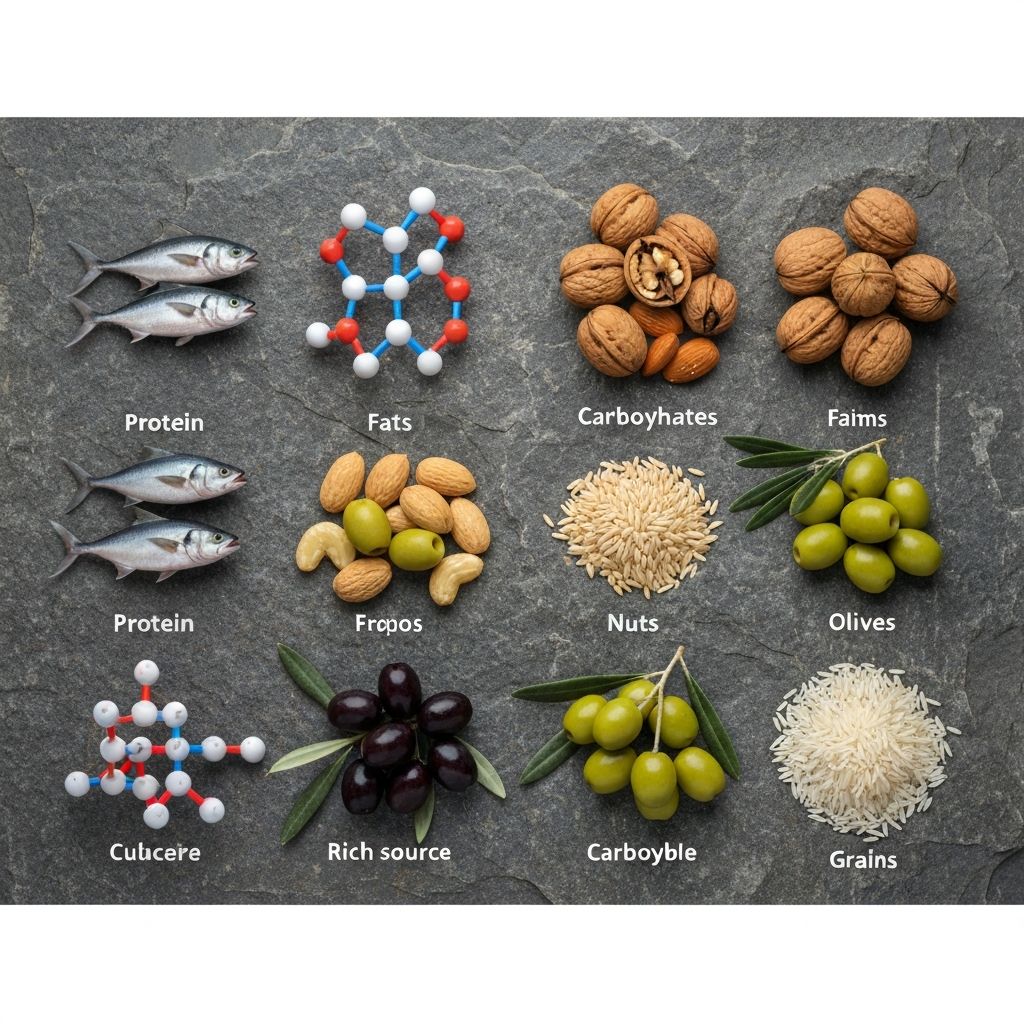
Introduction to Macronutrients
Macronutrients—proteins, fats, and carbohydrates—form the foundation of nutritional biochemistry. These three nutrient categories provide energy and serve as building blocks for tissues, enzymes, hormones, and countless other biological structures. Understanding the distinct roles each macronutrient plays provides context for appreciating nutritional balance.
Unlike vitamins and minerals, which function primarily as regulatory molecules, macronutrients are consumed in large quantities and serve dual purposes: providing energy and maintaining bodily structures. The body requires substantial amounts of all three macronutrients working in concert to sustain physiological vitality.
Proteins: Structural and Functional Architecture
Proteins comprise approximately 15-20% of body weight and are essential for virtually every physiological process. Structurally, proteins form muscle tissue, connective tissues, skin, hair, and organs. Functionally, proteins serve as enzymes catalyzing biochemical reactions, as hormones regulating physiology, and as transporters carrying substances through the body.
Amino acids, the building blocks of proteins, number approximately 20 in human biochemistry. The body can synthesize 11 of these "non-essential" amino acids internally, but the remaining 9 "essential" amino acids must be obtained from dietary sources. Complete proteins containing all essential amino acids include animal sources like fish, eggs, and meat, while plant sources like legumes, grains, and nuts contribute combinations of amino acids.
During periods of physical activity, muscle tissue undergoes microscopic damage requiring repair. Amino acids facilitate this repair process, enabling muscle tissue to adapt to activity demands. Adequate protein intake throughout the day supports this continuous tissue maintenance. Protein also influences satiety, making it important in appetite regulation.
Fats: Cellular and Hormonal Foundation
Dietary fats have been historically misunderstood, but modern nutritional science recognizes their essential roles in health. Fats serve as structural components of cell membranes, insulating materials for organs, energy storage molecules, and precursors for hormone synthesis. The brain, despite comprising only 2% of body weight, contains substantial fat, particularly specialized fats like docosahexaenoic acid (DHA).
Dietary fats enable absorption of fat-soluble vitamins including vitamins A, D, E, and K. Without adequate dietary fat, the body cannot efficiently absorb these essential vitamins. Different fat sources provide different fat compositions—animal fats, olive oil, nuts, seeds, and fish each contain unique combinations of saturated, monounsaturated, and polyunsaturated fats.
Research on Mediterranean dietary patterns reveals the importance of olive oil and fish as primary fat sources in traditionally healthy populations. These foods provide both energy and compounds associated with anti-inflammatory effects. Adequate fat intake supports hormone production, nervous system function, and cellular health.
Carbohydrates: Accessible Energy and Metabolic Function
Carbohydrates serve primarily as the body's preferred fuel source, particularly for the brain and nervous system. Glucose, derived from carbohydrate digestion, fuels continuous neural function and can be rapidly mobilized during physical activity. Carbohydrates come from various sources including grains, legumes, fruits, and vegetables, each providing different micronutrient profiles alongside carbohydrate energy.
Complex carbohydrates from whole grains and vegetables digest more slowly than simple carbohydrates, providing more sustained energy and satiety. The fiber component of whole-plant foods supports digestive health and creates prebiotic effects supporting beneficial gut bacteria. Different carbohydrate sources provide vastly different nutritional profiles despite similar energy density.
During intense physical activity, carbohydrates become particularly important for providing rapid energy mobilization. Post-activity, carbohydrate intake facilitates glycogen restoration—the storage form of glucose used for muscle fuel. The body preferentially stores excess carbohydrates as glycogen rather than converting them to fat for storage.
Macronutrient Balance and Individual Needs
While macronutrients are essential in certain minimum amounts, optimal amounts vary among individuals based on activity level, age, health status, and metabolic characteristics. A sedentary individual has different macronutrient needs than an active person. Aging affects protein requirements. Individual metabolic efficiency differs.
The concept of "macronutrient balance" recognizes that combinations of macronutrients work synergistically. A meal containing protein, fat, and carbohydrates together produces different metabolic effects than the same nutrients consumed separately. Practical nutrition emerges from understanding that real foods contain combinations of macronutrients, not isolated components.
Synergistic Functions
Proteins, fats, and carbohydrates interact in numerous ways. Protein requires adequate energy from carbohydrates and fats to be spared for its vital functions rather than being broken down for energy. Fats facilitate absorption of fat-soluble vitamin micronutrients. Carbohydrates trigger insulin release, facilitating amino acid uptake into muscle tissue.
Individual foods provide combinations of all three macronutrients in varying proportions. Nuts contain protein, fat, and carbohydrates. Grains contain primarily carbohydrates with meaningful protein. Fish provides protein and fat. Legumes provide protein, carbohydrate, and some fat. Understanding real foods within these frameworks proves more practical than viewing macronutrients as separate entities.
Practical Considerations
Rather than obsessing over precise macronutrient ratios, basic nutritional literacy involves understanding that adequate intake of all three macronutrients supports physiological function. Individual variation in optimal ratios means that flexibility and individual responsiveness matter more than rigid percentages.
Micronutrients—vitamins and minerals—deserve equal attention to macronutrients, as both are essential for health. Whole foods approach to nutrition, emphasizing diverse plant and animal foods, naturally provides balanced macronutrients alongside essential micronutrients in forms optimized for absorption and biological activity.
Educational Content
This article presents scientific information about macronutrient functions and roles in human physiology. It is provided for educational purposes only and should not be construed as personalized nutritional guidance. Individual nutritional needs vary based on personal factors, and dietary changes should be implemented thoughtfully.
Continue Learning
Explore more educational articles about nutrition and physiology.
View All Articles